
Ocean Sight One Projects
LAES Projects
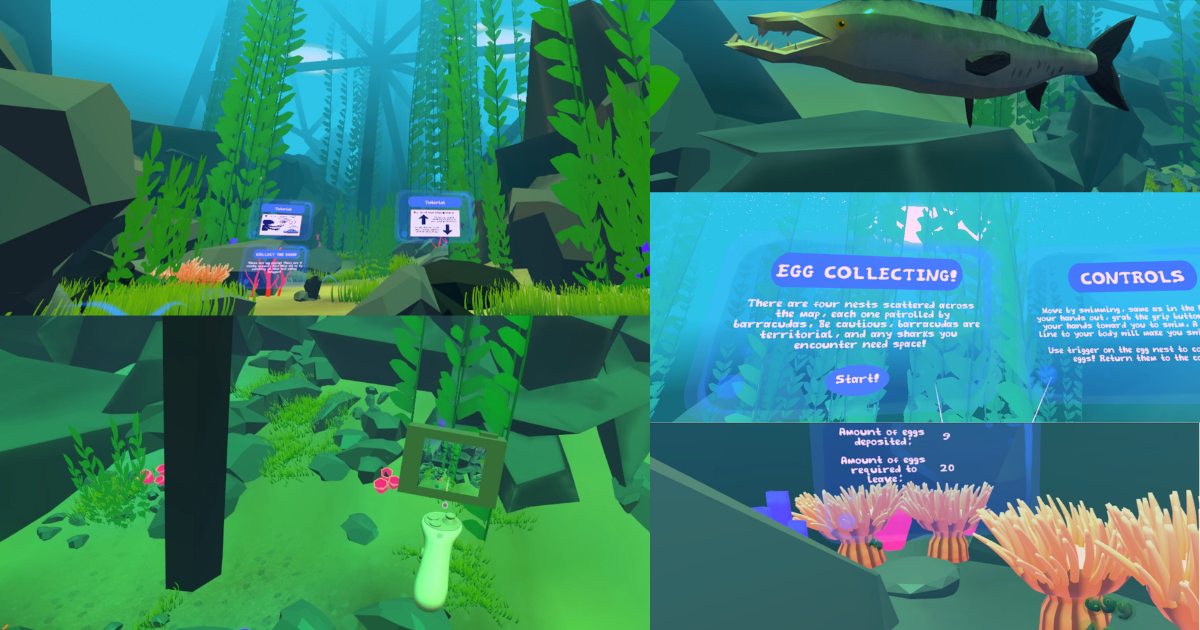
Ocean Sight One Virtual Reality Mini Games
Team: Joaquin Arredondo, Jaclyn Brodersen, Damien Butler, Christian Cuellar, John Freeman, Christopher Grigorian, Josh Hall, Anthony Lin, Maddie Morelos, Muska Mustafa, Sigourney Scott, Cameron Ung, Elijah Villanueva, Camila Yeremin, Varattaya Wuttijumnong, Moe Aung, Megan Robinson, Jacqueline Bartholomew
Project Description: The Ocean Sight One (OSO) VR experience is an immersive, interactive virtual reality environment that allows users to engage with the sea ecology integrated into California’s offshore oil platforms through embodied, first-person engagement. Users adopt the role of an intern working for the Love Lab, a marine biology research center at UC Santa Barbara, and complete tasks that support the preservation of this delicate ecosystem. By combining real-world data and casual gameplay-based learning, the experience invites participants to connect with marine life, understand the ecological role of the platforms, and ultimately foster greater awareness of and empathy for this unique and precious environmental system.
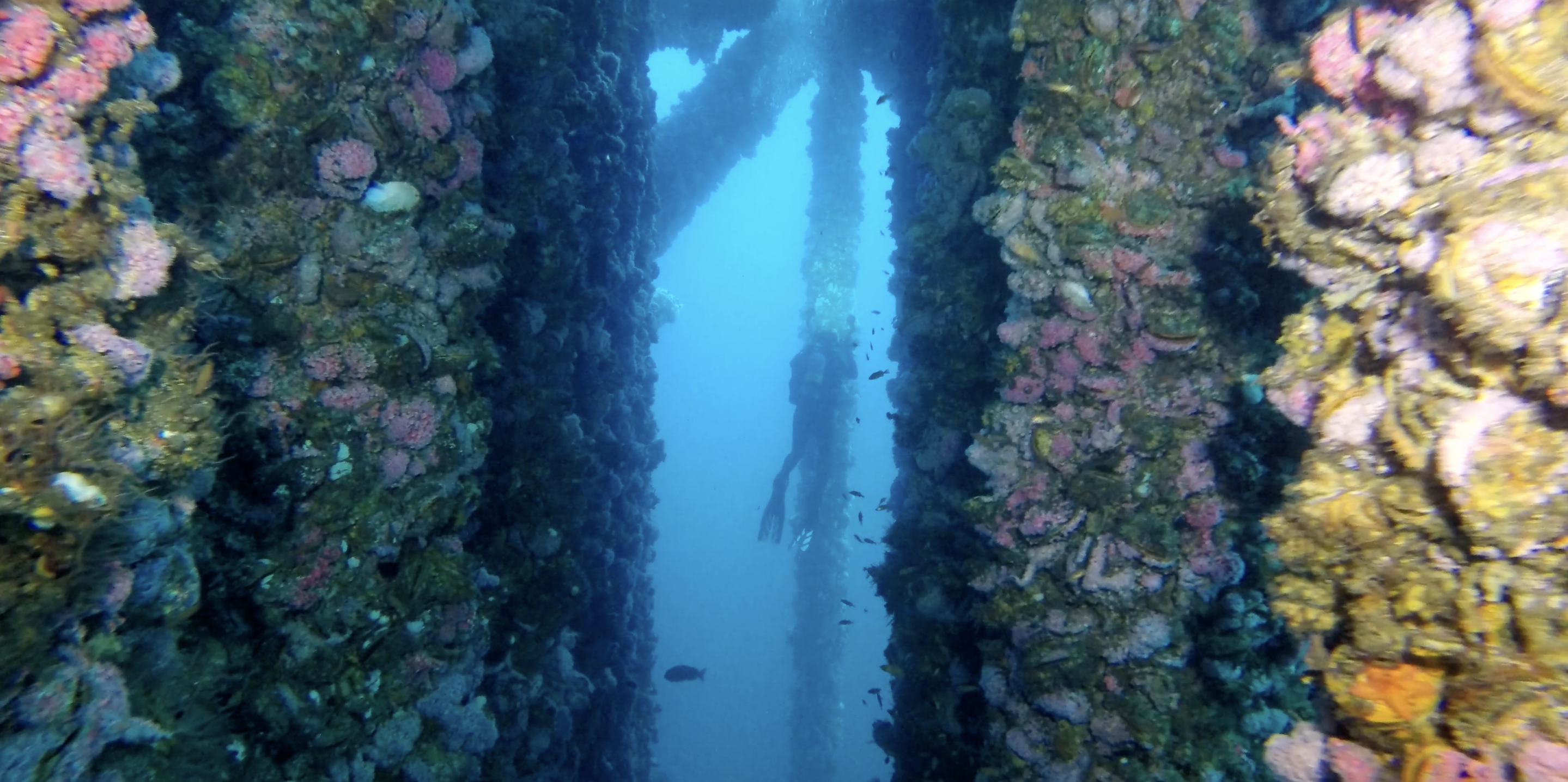
Project Background: Offshore oil platforms along the California coast, particularly near Santa Barbara, were originally built in the mid-20th century to extract petroleum from rich underwater reserves, becoming symbols of industrial expansion as well as environmental risk—especially after events like the 1969 Santa Barbara oil spill, which galvanized public opposition and shaped long-standing negative perceptions of these structures. Over time, however, scientific research has revealed a more complex reality: as oil production declined, the submerged structures of these platforms were colonized by marine organisms, transforming them into highly productive artificial reefs. Mussels, barnacles, anemones, and sponges attach to the platform bases, creating habitat that attracts fish species such as rockfish and lingcod, leading to biodiversity levels that can exceed those of nearby natural reefs. These ecosystems now support dense marine populations and contribute to fisheries, creating a paradox in which structures once viewed solely as environmental hazards are also recognized as valuable ecological habitats, complicating decisions about their removal or preservation.
Cal Poly Pier Virtual Reality Experience
Team: Jaclyn Brodersen, Annika Bullock, Alec Evans, Trisha Guha, Kaitlyn Le, David Lock, Martin Wise
Project Description: To assist Ocean Sight One researchers, students created a proof-of-concept, small-scale virtual reality experience incorporating 360-video, storytelling, audio, digital assets, and animation. This served as a vital reference piece for the submittal of a National Science Foundation grant proposal. The content of this experience centers around the dive training done at the Cal Poly Pier and showcases both above ground and underwater phases. Incorporating 360-video of divers off the Cal Poly pier filmed in a previous quarter, the team designed an interface in which a user becomes a diver in training and can effectively navigate and interact with the dive training experience in a way similar to the real thing!
Cal Poly Pier Mixed Reality Documentary
Team: Elyssa Abbott, Ben Geil, Trisha Guha, Casey Hartley, Carter O'neill, Aidan Ream
Project Description: Students integrated 360 video, audio, and digital assets to compose a documentary on the Cal Poly pier, highlighting its origin, function as a university and public resource, and how it would evolve over the next 5-10 years. This innovative form of storytelling saw the team collecting historical and current data on the pier through a review of historical documents and interviews with staff, faculty, and students presently working on day-to-day operations, marine research, and industrial projects, creating a treatment to present the pier's story using mixed reality, and conducting testing on sample mixed reality clips to contribute to this emerging style of documentary.